
Archive for

2026


Tennessee spent $1.175 million on lethal injection drugs

Read the full article below: Tennessee paid $1.2M for execution drugs amid secrecy, failures: exclusive​

Evan Mealins and Kelly Puente, October 22, 2026

The state of Tennessee has spent $1.175 million on lethal injection chemicals in recent years while failing to carry out two of its three recent executions.

Nearly all other details about the lethal injection drugs, like where they came from, remain hidden from the public.

An attorney who represents people on death row said there is “absolutely no transparency” around the chemicals.

“It’s an awful lot of money for the taxpayer to be expending without any additional information about it,” said Kit Thomas, deputy chief of the capital habeas unit in the Federal Defender’s Office.

Records show the Tennessee Department of Correction made two payments for procuring lethal injection chemicals since Jan. 1, 2023. One payment, which The Tennessean previously reported, was for $525,000. The other was for $650,000.

The records don’t show when the drugs were purchased, how much pentobarbital Tennessee received, the price per dose or whether any of the drugs have expired.

Tennessee resumed executions in 2025 under a new, single-drug lethal injection protocol using pentobarbital, following a three-year hiatus prompted by the state’s failure to follow its previous three-drug protocol.

Since resuming executions, Tennessee has executed four prisoners and unsuccessfully attempted to execute two others: Pike and Tony Carruthers.

TDOC has fought in court the release of nearly any information related to lethal injection, from the chemicals’ expiration date to how much training its IV team has. The department cites a state law that shields the identity of any employee or contractor participating in the execution process.

The department said it was “unable to comment at this time” when asked about the drug purchases.

Pentobarbital is a barbiturate used to treat certain seizure disorders and euthanize animals.

The state’s $1.175 million in payments far exceeds the cost of individual vials of manufactured pentobarbital, although records do not reveal how much of the drug Tennessee purchased or whether the payments covered related expenses for procuring the pentobarbital, such as transportation.

A 50-milliliter vial of manufactured pentobarbital at the concentration Tennessee uses for executions typically costs between $2,100 and $2,800, according to Michaela Almgren, a University of South Carolina pharmacy professor who submitted a report in ongoing death penalty litigation.

Tennessee’s execution protocol calls for the injection of either two or four 50 ml syringes of pentobarbital, depending on whether the person is still alive.

Under Tennessee’s lethal injection protocol, the execution team prepares two syringes of pentobarbital ahead of time. The state must also have enough pentobarbital on hand for two more syringes of the drug if the first round fails to kill the prisoner. The protocol does not say whether syringes that were not used in an execution attempt can be used in future executions.

All major manufacturers of pentobarbital won’t sell their drugs directly to states for executions. Some states have purchased manufactured lethal injection drugs outside the normal supply chain at a high markup as a result. Manufacturers have sued at least two states, Nevada and Nebraska, for using their drugs in lethal injections without their consent.

There is another way to get pentobarbital.

Through compounding, pharmacists can take raw ingredients and make specialized drugs at a pharmacy. Unlike manufactured medications, compounded drugs are not approved by the U.S. Food and Drug Administration.

TDOC has refused to reveal whether the pentobarbital it is using in executions is manufactured or compounded.

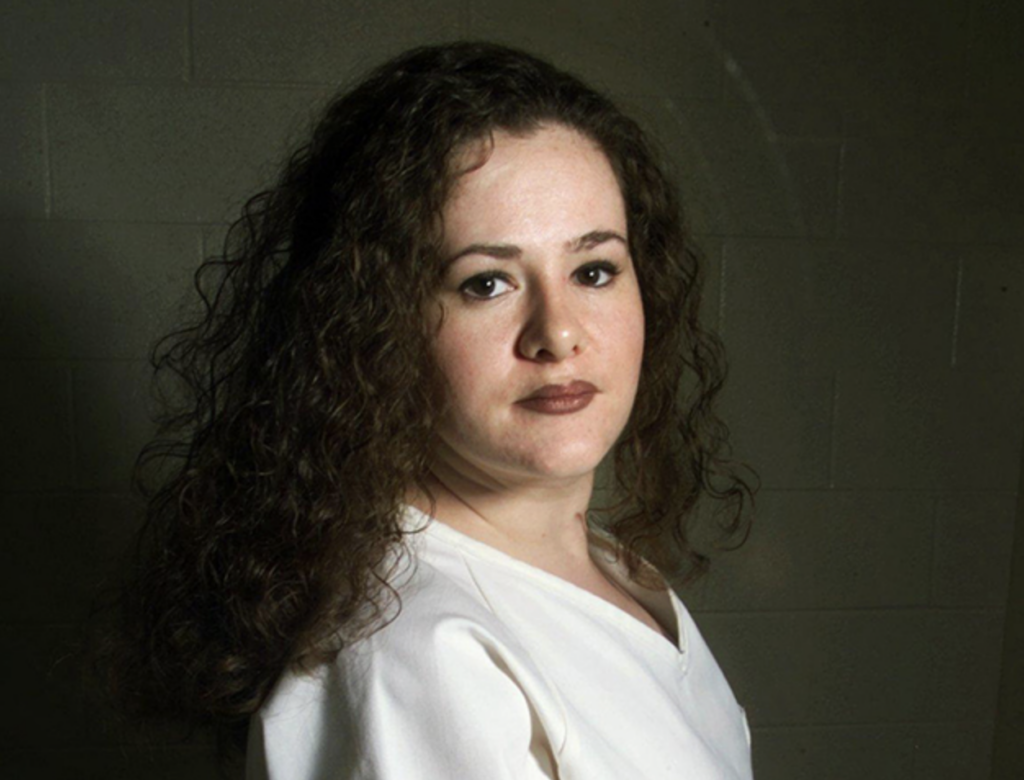
Pike, sentenced to death for a grisly 1995 murder in Knoxville, survived four 50 ml syringes of pentobarbital during the state’s failed attempt to execute her Sept. 30.

Her survival has raised new questions about the effectiveness of Tennessee’s lethal injection process, including whether the pentobarbital was properly prepared and administered.

Carruthers, convicted of killing three people who were abducted, shot and buried in a Memphis cemetery in 1994, walked out of the death chamber in May after the execution team failed to set the needed IV lines.

Gov. Bill Lee has paused executions in the state while an independent investigator reviews whether TDOC followed its protocol during Pike’s failed execution.

This is the second review of capital punishment in Tennessee undertaken during Lee’s tenure. The first revealed widespread problems with the execution process between 2018-2022, including a failure to properly test lethal injection drugs or provide a copy of the execution protocol to the pharmacy responsible for testing the drugs.

The Tennessee attorney general’s office recently told The Tennessean it paid Butler Snow law firm $269,403.08 for the investigation.

The records showing how much TDOC paid to procure lethal injection drugs were obtained through a public records request to the Tennessee Comptroller of the Treasury. The Tennessean sought all records showing payments for the procurement of lethal injection drugs between Jan. 1, 2023 and Oct. 1, 2026.

The Tennessean received records of two emails sent by outgoing TDOC Commissioner Frank Strada to Comptroller Jason Mumpower reporting the payments. The records provided to The Tennessean don’t show the dates the emails were sent.

Tennessee law shields the identities of people and companies involved in obtaining execution drugs, but it requires the state to publicly report certain payments to contractors involved in carrying out executions. The law also requires confidential information to be redacted rather than used as grounds to withhold otherwise public records.
Maybe Tennessee doesn’t need a better way to execute people | Opinion

The Tennessean published the following op-ed on October 6, 2026.

On Sept. 30, the State of Tennessee tried to kill Christa Pike. It did not succeed.

Four months earlier, Tennessee tried to execute Tony Carruthers. That execution failed, too.

I am a United Methodist pastor and a chaplain to people on Tennessee’s death row, but my relationship with capital punishment began long before I became a chaplain.

I know what murder does to a family.

In 1997, when I was 17 years old, four children in my family were murdered by their father, Daryl Holton. Stephen Holton was 12, Brent Holton was 10, Eric Holton was 6 and Kayla Holton was 4. I served, alongside my father and uncles, as a pallbearer, carrying their small white caskets to their final resting place in rural Bedford County. Those children, along with their father, were my cousins.

Ten years later, Tennessee executed Daryl in the electric chair.

Conviction rooted in experience

So when I say I oppose the death penalty, I do not say it because I do not understand violence firsthand. I say it because I do.

Colleen Slemmer was 19 when Christa Pike participated in her murder in 1995. Colleen’s life mattered, and the brutality of her death should never be minimized to make opposition to capital punishment easier. For more than three decades, her family has carried a grief that no family should have to carry.

We can tell the truth about what Christa did and still ask whether killing her is justice, because after what happened Sept. 30, questions about drugs, IV access, personnel and protocols matter.

But perhaps we are asking the wrong question. Instead of asking how we make the machinery work better, perhaps we should ask whether the machinery itself is the problem.

Underneath all the clinical language of capital punishment, something remarkably simple is happening: Human beings are desperately trying to figure out how to kill human beings. Somebody must find the vein, somebody must prepare the drugs, somebody must give the order, somebody must watch and everyone must carry the memory afterward.

Does Tennessee have the courage to stop killing?

I have known people who were murdered. I have known people the state intended to kill. None of those experiences has made me believe less in accountability; they have made me believe less in killing. My Christian faith shapes that conviction, but you do not have to share my faith to question whether a government capable of imprisoning someone for life also needs the power to kill them.

Manage Subscription

Mercy that requires pretending evil never happened is cheap mercy. We can look directly at what someone has done, require accountability and still insist that a human being is more than the worst thing they have ever done.

The dead do not come home because we execute someone. Stephen, Brent, Eric and Kayla did not come home when Tennessee executed their father. Nothing about Daryl’s execution resurrected those four children. I wish it could have.

That is the terrible thing about murder. There is no punishment capable of undoing it.

Tennessee can investigate what happened, revise its protocols and try again. And perhaps someday we will convince ourselves that we have perfected the machinery. Or we can ask a harder question: Why are we so committed to making the machinery work?

Perhaps honoring the dead does not require creating more of them. Perhaps justice can hold people accountable without asking us to become participants in the very thing we say we condemn. Perhaps Tennessee does not need a better way to execute people.

Perhaps we need the courage to stop.

The Rev. Timothy Holton-Overcast is a United Methodist pastor in Middle Tennessee and serves as a chaplain to people incarcerated on Tennessee’s death row. He writes here in his personal capacity. 

Ask Governor Lee to Reconsider Clemency for Christa Pike

A federal court has stayed the execution of Christa Pike…for now.

The U.S. Court of Appeals for the 6th Circuit issued an order staying Pike’s execution “until further order of this court.” Her attorneys have confirmed the stay.

Just a few minutes ago, TADP gathered online with 100 others for a prayer vigil for all victims of violence, including Colleen Slemmer and Christa Pike. This unexpected stay provided us with a welcome sense of hope during the vigil, even as we remembered and grieved lives lost and our State’s continued reliance on a failed death penalty system.

TAKE ACTION: In light of Christa Pike’s stay of execution from the federal court, we have an opportunity to reach out one more time to ask Governor Lee to be merciful and grant her clemency.

Send a letter to Governor Lee now!

Governor Bill Lee Denies Clemency for Christa Pike

STATEMENT BY CHRISTA PIKE’S ATTORNEYS ON GOVERNOR LEE’S CLEMENCY PETITION DENIAL

Statement from Stephen Ferrell, Federal Defenders Office of Eastern Tennessee, and Kelly Gleason and Randy Spivey, Tennessee Office of the Post Conviction Defender, attorneys for Christa Pike

September 28, 2026 – “We are deeply saddened and heartbroken by Governor Lee’s decision to deny clemency for Christa Pike. Moving ahead with her execution puts the State of Tennessee on singular footing: Christa will be the first person Tennessee executes in the modern death penalty era who was a teenager at the time of the offense and the first woman executed by the state in more than 200 years.

Throughout her childhood, Christa was failed by people and institutions that should have shown her care and meaningful intervention. Instead, her childhood was marked by repeated, documented rape and sexual abuse, neglect, and violence.

The 18-year-old girl suffering from severe mental illness and near-debilitating trauma no longer exists. Christa is a 50-year-old remorseful woman who understands her actions, receives proper treatment for her mental illness, and provides for and guides fellow incarcerated women.

With this decision, the State of Tennessee is ignoring what both science and our legal system have decided: an 18-year-old brain is not an adult brain, and 18 is too young to face execution. This decision also leaves unanswered vital questions about Tennessee’s execution protocol.

We will continue to support Christa through every remaining avenue and advocate for a system that is transparent for the people of Tennessee.”

TAKE ACTION: Ask Governor Lee to Commute Christa Pike’s Death Sentence

Christa Pike is the only woman on Tennessee’s death row for a crime committed when she was an 18-year-old girl with severe trauma and untreated mental illness. She is a victim of child sexual abuse, multiple rapes that began when she was a toddler, and parental abandonment and neglect.

If her execution proceeds, Christa Pike will be the first woman put to death in the State of Tennessee in more than 200 years.

TAKE ACTION: Ask Governor Lee to Commute Christa Pike’s Death Sentence

At the time of the crime, Christa suffered from untreated mental illness, undiagnosed bipolar disorder, and PTSD from a lifetime of horrific and repeated childhood rapes, physical and sexual abuse, and neglect that began when she was in diapers.

The State of Tennessee is not disputing Christa’s childhood fraught with serious trauma. This was evident in a recent hearing challenging the method of execution when Assistant Attorney General Will Ayers said, “I think everybody in this courtroom wishes those [terrible] things had never happened to Ms. Pike.

To learn more about her case visit mercyforchrista.org and follow @mercyforchrista on Instagram and Facebook.

Death Penalty Information Center (DPI) Podcast Features TADP’s Rafiah Muhammad-McCormick

In Death Penalty Information Center’s (DPI) August episode of 12:01: The Death Penalty in Context, TADP’s Director of Community Outreach and Founder of Rodney’s Village Rafiah Muhammad-McCormick speaks with DPI’s Racial Justice Storyteller Taylor Bonner.

Through this conversation, Rafiah shares how the murder of her son, Rodney, shaped her approach to vio­lence pre­ven­tion and death penal­ty advo­ca­cy, the impor­tance of com­mu­ni­ty account­abil­i­ty, and the resources vic­tims and their fam­i­lies need to heal after violence.

You can listen to the podcast here.

Statement from Darrell Hines’ Attorney Following His Execution, August 13, 2026

Statement from Attorney for Darrell Hines Following His Execution Today

“I’d like to start by saying that I grieve for the family of Catherine Jean Jenkins. May God be with you.

“I also grieve the violence the State of Tennessee inflicted on us all today. On Darrell, of course, who was poisoned to death, just moments ago. On those of us required by our jobs to stand passively and watch Darrell be murdered. On the prison guards and officials whose jobs require them to participate. On Darrell’s son, who met Darrell four days ago for the first time and watched him die this morning. What we witnessed here today is not normal, and I urge us all to not become numb or indifferent to the cruelty.  

“Darrell’s family and his legal team cared for him deeply. He endured a childhood filled with the worst kinds of poverty and abuse. His family and community failed to make sure that he had enough food to eat and a safe and stable home. Darrell bore the scars of many years of abuse but could still make you laugh. He was a masterful storyteller. He loved fantasy books and the escape those stories provided. He was funny. He was loyal. He lived by a code. He was a child of God.

“The leaders of this state repeatedly invoke the sanctity of life, but today the State put to death a man who was blind and paralyzed on his left side, could not walk, and was in constant pain. They lifted his body onto a gurney and wheeled him to the death chamber. May God have mercy on us all.”

– Katherine Dix, attorney for Darrell Hines

– August 13, 2026

Medical Professionals Call on Governor Lee to Pause Executions and Review the Lethal Injection Protocol

From the left, Rob Quinn and John Greer, both doctors, are part of a group of about 40 medical professionals called for a pause to Tennessee’s executions on Tuesday July 28, 2026 in Nashville Tenn. (Photo: John Partipilo/Tennessee Lookout)

Yesterday, Tennessee medical professionals held a press conference in Nashville, urging Governor Lee to pause executions so the State can review and make meaningful changes to its problematic lethal injection protocol. Medical professionals are the latest in a chorus of voices, including Republican lawmakers, faith leaders, and a former Tennessee Correctional officer, asking Governor Lee to intervene.

“Yet another group is calling for a death penalty moratorium after the failed execution of Tony Carruthers in May. This time, it’s doctors and nurses.”  WPLN Reporter Catherine Sweeney.

A letter signed by nearly 50 Tennessee medical professionals was also sent to the governor’s office. The letter says in part: “The horrifyingly botched attempt to execute Tony Carruthers on May 21 confirmed that TDOC is not presently able to conduct an execution that complies with the law, its own protocol, or basic human decency.”

The letter from the Medical Professionals can be found here.

Among concerns raised at the press conference is the training and experience needed by a physician in order to establish a central line. This procedure is required by the state’s exe­cu­tion pro­to­col if a back-up line cannot be established. The participating physician in the botched, near execution of Tony Carruthers admitted in a deposition that he had not placed a central line in over a decade. He then failed in his attempt to establish one for Mr. Carruthers, and the execution was finally stopped after 90 minutes.

An additional concern raised by the doctors is the participation of a physician in an execution at all. Such participation requires physicians to set aside their ethical obligations, contradicting their Hippocratic Oath and American Medical Association directives.

Today attorneys for Darrell Hines asked Governor Lee either to grant Mr. Hines a reprieve or commute his death sentence ahead of his August 13 execution date. His attorneys note that the TDOC failed to follow its own protocol in the failed execution of Tony Carruthers and that Mr. Hines’s debilitated medical condition following a series of strokes makes it even more likely that the execution team will struggle to obtain IV access and will have to insert another central line.

TAKE ACTION: Ask Governor Lee to grant Mr. Hines a reprieve so the State can review and address the problems with Tennessee’s lethal injection protocol before another person is executed.

If you have already signed the letter, share it with five other people and ask them to sign on!

Former Tennessee Correction Officer Share His Traumatic Experience As a Member of the Execution Team

We at TADP regularly highlight the ripple effects of executions on everyone they touch, including the families of the victims and the executed, attorneys, media witnesses, and correction officers tasked with carrying them out.

Recently when asked by reporters whether the State should stop the upcoming execution of Darrell Hines on August 13 to review Tennessee’s lethal injection protocol, given the botched, near execution of Tony Carruthers in May, Governor Lee replied that he believes “everything about the protocol of the death penalty was carried out appropriately.”

Governor Lee’s remarks are not only dismissive of the horror inflicted on Tony Carruthers, but also of the trauma that this ordeal inflicted on participating Tennessee Department of Correction (TDOC) staff.

In an op-ed published in The Tennessean, Ian Congleton, a former TDOC officer, writes about his experience as a member of the execution team, the impact of that experience on his life, and why he is asking Governor Lee to stop executions to address the problems with this protocol.

A transcript of the op-ed is below. Please share widely.

I worked Tennessee executions. The trauma nearly killed me

A former Tennessee correctional officer says working executions left him with PTSD and urges Gov. Bill Lee to pause executions until TDOC can reliably follow its own protocols.

Ian Congleton, July 22, 2026

In my early 20s, I spent two years as a correctional officer with the Tennessee Department of Correction (TDOC), working at Riverbend Maximum Security Institution. I was there when Tennessee started executions again in 2018, and I worked on several executions. That experience nearly cost me my life.

In the years since, I have tried not to think about that period. But when I saw the news about TDOC’s botched attempt to execute Tony Carruthers in May, I felt compelled to share my experience. That is why I sent a letter to Gov. Bill Lee asking him to protect correctional staff from the trauma I suffered by pausing executions, at least until TDOC demonstrates it can carry them out in compliance with its protocol.

I never expected to be part of Riverbend’s execution team

When I joined TDOC in 2017, Tennessee had not executed anyone for several years, and the possibility of working on an execution was not on my mind. I completed TDOC’s training and went to work at Riverbend. I worked in many different areas of the prison, including death row.

When Tennessee resumed executions in 2018, I did not volunteer for the execution team, but the warden assigned me to it. I worked on several executions, beginning with Billy Ray Irick and ending with Stephen Michael West. Some were by electrocution, and some were by lethal injection. I had several different roles for these executions, including escorting witnesses and strapping down the prisoner. I also personally witnessed several of the executions from various points where I was assigned to stand.

The trauma followed me long after each execution

Everything I did and saw working on executions took a serious toll on me. I never felt that I could speak up about what I was feeling, because there was a culture at Riverbend to keep quiet and “man up.” I was never offered counseling after an execution.

After Mr. West’s execution in 2019, I had a mental health crisis. I was so tormented by thoughts about the executions that I decided to take my own life. Fortunately, the last bit of hope in my mind told me to call my mom. She checked me into an inpatient mental health clinic, where I spent a week, and then I spent another four weeks in intensive outpatient care.

I was diagnosed with post-traumatic stress disorder, anxiety and depression. I still take medications for these conditions today, and I still experience flashbacks, nightmares and other symptoms of the lasting trauma I suffered working on executions in Tennessee.

Looking back, I believe a lot of the trauma I absorbed came from the chaos surrounding how executions were handled and the feeling that, unless TDOC changed its approach, things would inevitably go wrong.

The execution process often felt chaotic

Over the two years when I worked on multiple executions, I only recall having one run-through of the protocol, where we practiced both a lethal injection execution and an electric chair execution. The protocol changed after that run-through, but I don’t remember having any training on how to follow the revised protocol or doing another run-through. Also, every execution day was chaotic, with people out of position and jobs being shuffled around. In one execution, I was in the middle of strapping the prisoner down when I was told to go man the sally port instead.

From what I read in the news about Tony Carruthers’s failed execution, nothing has changed except there is a new protocol that staff probably haven’t been fully trained on. I worry about all the folks at TDOC who were traumatized by that day, and I have no doubt that unless something changes dramatically in Tennessee, the next execution and those that follow it will continue harming correctional staff.

Gov. Lee should consider the human cost to correctional officers

I no longer live in Tennessee, and I no longer work in corrections, but I will always carry the emotional scars of what I went through helping Tennessee execute prisoners. I wish someone had told the governor back in 2018 what those executions would do to the people like me who worked for TDOC.

I am telling Governor Lee now, and I pray he will listen.

Ian Congleton worked for the Tennessee Department of Correction from 2017 to 2019. At that time, his legal last name was Anderson.

Photo from The Tennessean

Tennessee Republican Senators Request Full Review of Botched Execution Attempt Before Any Future Executions

Late Monday afternoon, the Tennessee Lookout reported that eight Tennessee Republican Senators, including Majority Leader Jack Johnson of Franklin, sent a letter to Governor Lee urging an independent review of Tony Carruthers’ failed execution attempt before the state moves forward with any other executions.

“The effort dragged on for well over an hour before the execution was called off. This was a failure of the State of Tennessee to carry a lawful sentence of its own courts,” the letter to Governor Lee says.

In addition to Majority Leader Jack Johnson, Sen. Ferrell Haile of Gallatin, Sen. Joey Hensley of Hohenwald, Sen. Becky Massey of Knoxville, Sen. Richard Briggs of Knoxville, Sen. Tom Hatcher of Maryville, Sen. Dawn White of Murfreesboro and Sen. Ken Yager of Kingston all signed the letter.

Later in the week, we learned that Senator Paul Bailey of Sparta signed on as well!

According to the Lookout, the senators told Governor Lee that before another execution is attempted, they want:

Every deficiency identified in a review to be corrected, as well as independent testing of lethal drugs for potency, sterility and contamination, confirmation the drugs aren’t expired and verification that personnel are qualified…test results and personnel qualifications made available to them and the public, “to the fullest extent consistent with law,” to verify the Department of Correction’s ability to perform executions.

TADP and our supporters (that’s you!) have urged more transparency in the execution process for years, educating lawmakers about our concerns and advocating for legislation that requires more transparency in executions.

This letter is a result of that work. You helped to make this happen!

TAKE ACTION: Join the chorus of Tennesseans from both sides of the aisle to urge Governor Lee to stop the execution of Darrell Hines on August 13 so concerns about Tennessee’s lethal injection protocol can be addressed.

P.S. Learn more about the failures of Tennessee’s lethal injection protocol in the Nashville Banner.

JOIN OUR

MAILING LIST